
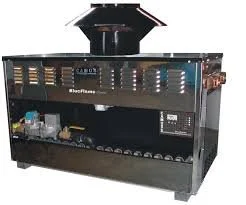
Camus BFNH-660-2G1 Maintenance Checklist (The BFNH-660-2G1 is a model in the Camus Blue-Flame Series of gas-fired commercial copper-tube hydronic boilers/water heaters, typically rated around 660 MBH input, natural gas configuration with possible 2-stage or specific gas train options indicated by “-2G1”. This checklist is based on the official Camus Blue-Flame Series Installation, Operation & Service Manual (covering BFH/BFW 660 models). Always follow the exact manual for your unit, local codes (e.g., ANSI Z223.1/NFPA 54, ASME CSD-1), and have qualified technicians perform work. Disconnect power and gas supply before any servicing. Warranty requires proper maintenance; scaling/lime buildup, freezing, or dry-firing voids coverage.)
Safety & Preparation (Before Any Maintenance)
Shut off main power (115V/60Hz supply) and close main manual gas valve.
Allow unit to cool completely.
Label all wires before disconnection.
Verify proper operation after reassembly/servicing.
Use only factory-authorized parts.
Wear appropriate PPE; follow lockout/tagout procedures.
Frequency Overview
Daily/Operational: Visual checks during normal use.
Every 6 months: Flame inspection, safety device testing (mandatory per manual).
After first season / Annually: Full service including heat exchanger inspection.
As needed: If unusual noises (pinging, crackling, hissing), leaks, error lights, or poor performance occur.
Seasonal (60+ days idle): Full control check before restart.
1. Visual & External Inspection (Monthly or Every 6 Months)
Inspect cabinet/jacket for damage, corrosion, or leaks.
Check all piping (water, gas) for leaks, corrosion, or damage.
Verify proper water flow (pump running, no air in system).
Ensure clear access for service (burner tray slides out easily).
Check for accumulation of dust, lint, or debris around air inlets.
Inspect relief valve for leaks or discharge; manually test every 6 months.
2. Burner & Ignition System (Every 6 Months or as Needed)
Main Burner Flame Check (every 6 months):
Observe flame: Should be steady blue (natural gas) with minimal lifting, smooth light-off, reasonably quiet operation, and acceptable CO/CO₂ levels.
If yellow tips, lifting, noise, or instability: Check for lint/dirt at burner air inlets → clean as below.
Burner Cleaning Procedure (qualified technician):
Shut off power and close main manual gas valve.
Remove burner tray assembly (slide-out design for easy access).
Vacuum or clean burners (remove lint, dust, scale).
Inspect burners for damage or warping; replace if needed.
Reinstall tray with new gaskets if required (heat-affected gaskets must be replaced).
Test for proper flame after reassembly.
Pilot/Igniter Check & Cleaning (every 6 months or with flame issues):
With gas valve off, cycle ignition to observe spark (must be strong and continuous).
Adjust spark gap to 1/8"–3/16" if needed.
Remove igniter/electrode (after removing burner tray).
Clean with fine sandpaper if fouled with carbon.
Reinstall; tighten pilot line connection.
Light pilot: Flame must be blue and fully engulf ignition sensor/ground plate.
Cycle pilot multiple times for reliability.
Turn main gas on; verify pilot stays lit when main burner fires.
Run boiler 15+ minutes and cycle to confirm stability.
3. Heat Exchanger & Water Side (After First Season, Then Annually or as Needed)
Inspect for scaling, corrosion, or damage (copper tubes/coils).
Listen for pinging/crackling/hissing during operation → immediate shutdown and inspection required (scaling not covered by warranty).
Clean if dirty: Follow detailed venting/heat exchanger procedure in manual Section 6 (typically involves removing access panels, vacuuming flue passages, checking for blockages).
Check inlet water temperature ≥110°F to prevent condensing (warranty void if condensing occurs).
Flush low-water cutoff (float type) every 6 months.
Test system water for hardness/chemistry; treat if needed (consult factory for hard water areas).
Ensure no “Stop Leak” or boiler compounds used.
4. Venting & Combustion Air (Every 6 Months / Annually)
Inspect vent pipe for leaks, corrosion, blockages, or damage.
Verify proper venting per manual (Category I or as installed; follow NFPA 54/CAN/CGA B149).
Check combustion air supply/intake for obstructions, adequate volume, and no contaminants (corrosive chemicals void warranty).
Clean intake screens/filters if present.
Confirm draft/venting supports non-condensing operation.
5. Safety Devices & Controls (Every 6 Months – Mandatory)
Test low-water cutoff, flow switch, high-limit aquastat, and all safety interlocks for proper operation.
Manually operate relief valve(s).
Verify ignition safety shut-off functions correctly (per manual Section on check-out).
Check all electrical connections for tightness/corrosion.
Test pump interlock (circulator must run before burner fires).
For seasonal units: Full functional test of all controls by qualified technician.
6. Gas Supply & Piping (Every 6 Months or Annually)
Check inlet gas pressure: Natural gas 5–7" WC (min/max per manual); do not exceed ½ psi (14" WC) at inlet.
Inspect gas train, valves, and connections for leaks (use soap solution; never open flame).
Verify drip leg/trap is clean and functional.
For 2-stage models (if applicable to -2G1): Check staging operation and pressures at each stage.
Confirm manual shut-off valve and union are accessible.
7. Electrical & General System (Every 6 Months)
Verify 115V supply and grounding.
Check fuses/breakers (15A typical).
Inspect wiring for damage; no splicing recommended.
Test all lights/indicators (power, water flow, etc.).
Ensure pump operates correctly before burner ignition.
8. Documentation & Records
Log all maintenance: Date, technician, findings, parts replaced, test results.
Keep manual on-site.
Retain proof of maintenance for warranty claims (up to specified years on heat exchanger, 1 year on parts).
Additional Notes & Warnings
Qualified personnel only: Installation, service, and adjustments by trained Camus-approved technicians.
No temporary construction use.
Freeze protection required in cold climates.
Excessive hardness or corrosive chemicals void warranty.
If unit was exposed to fire/flood: Full inspection before restart.
Contact Camus Hydronics or authorized rep for parts (e.g., burners, igniters, gaskets) or model-specific details on BFNH-660-2G1 configuration.
Perform maintenance more frequently in dusty/dirty environments or high-use applications. This checklist ensures safe, efficient, and reliable operation while maximizing longevity of your Camus BFNH-660-2G1 boiler. For the complete illustrated procedures, refer to the official manual (99-0030 Rev. 03.01 or latest)