
A heating expansion tank (also called a diaphragm or bladder expansion tank) in a boiler system manages thermal expansion of the water in a closed hydronic heating loop.
When the boiler heats the water, it expands in volume (water expands as it gets hotter). In a sealed system with no room for this expansion, pressure would rise dangerously high, potentially causing pipes to burst, components to fail, or the pressure relief valve to discharge water frequently.
The expansion tank solves this by providing a flexible cushion:
It contains a rubber diaphragm (or bladder) that separates the system water from a pre-charged air chamber.
As hot water expands, it pushes into the tank, flexing the diaphragm and compressing the air on the other side (the air acts like a spring).
This absorbs the extra volume and keeps system pressure stable and safe (typically rising only a few PSI during heating cycles).
When the system cools and water contracts, the air pressure pushes back, maintaining positive pressure throughout the system.
This prevents over-pressurization, reduces wear on the boiler and relief valve, and helps avoid issues like water hammer or air ingress. Modern systems almost always use bladder/diaphragm types (closed expansion tanks) rather than older plain steel compression tanks. The tank is sized based on the system's water volume, temperature range, and pressure settings.
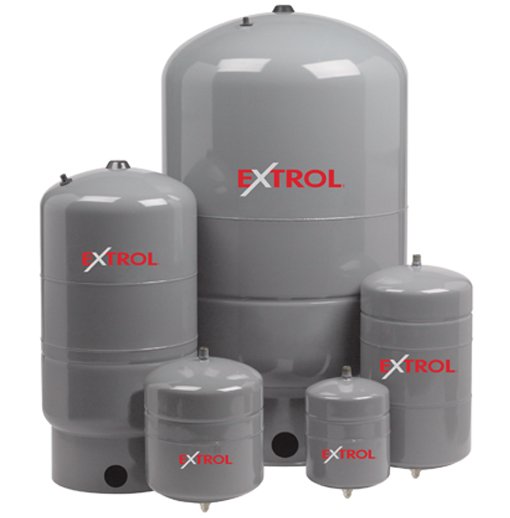
Not the same product as what is currently install. Image for reference only.